DREAMSEA and the Buddhist Archive Reunite to Digitize Manuscripts in Hongsa, Laos
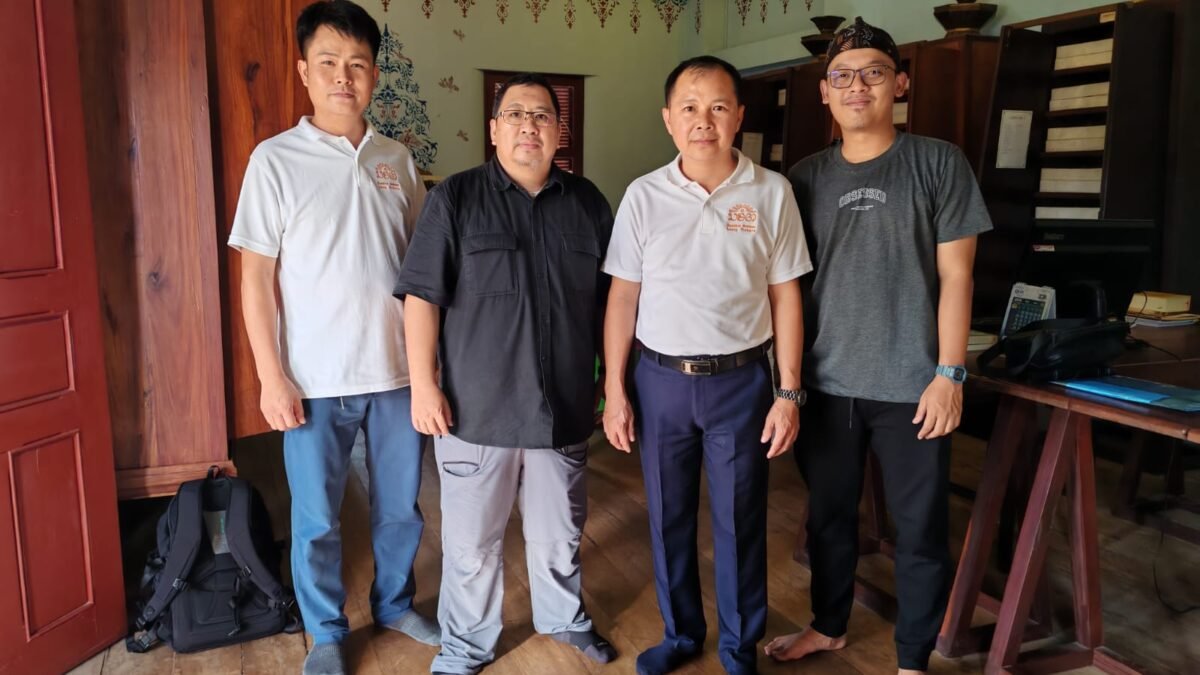
From left: Bounsou Saytham, Hadi Rahman, Khamvone Boulyaphonh, and Abdullah Maulani (Photo: Abdullah Maulani)
LUANG PRABANG — DREAMSEA (Digital Repository of Endangered and Affected Manuscripts in Southeast Asia) has completed a vital international monitoring and digitization mission in Laos. The mission focused on strengthening local capacities, evaluating field workflows, and navigating the delicate cultural landscape of Buddhist manuscript preservation.
Hadi Rahman (Program Coordinator) and Abdullah Maulani (Researcher and Data Manager) from DREAMSEA spearheaded the on-site monitoring from 6 to 10 June 2026. The initiative involved direct engagement with several key regional stakeholders. The mission itself is being carried out by the Buddhist Archive team, which includes academic expert Dr. Khamvone Boulyaphonh, Bounsou Saytham, Sumsak, and the resident monks.
The Buddhist Archive is a long-standing collaborator of DREAMSEA. This mission marks the sixth collaboration between the two institutions and is taking place at Vat Si Mungkhun in the Hongsa District of Xayabouli Province, an area located roughly 112 kilometers from Luang Prabang. The site serves not only as a religious repository but also as a historical anchor for the Phuan migrant community that settled the region four centuries ago. As the mission is still ongoing, it aims to digitize over 500 palm-leaf manuscript (bai lan) bundles, including rare texts such as Olaphin and Lin Thong.
A critical phase of the monitoring involved multi-material digitization trials. The team rigorously tested hardware and software configurations across diverse mediums, including traditional palm-leaf manuscripts, native mulberry paper, and modern paper documents. This process ensured maximum imaging precision regardless of the textual medium.
Field visits were also conducted across previously digitized sites in Luang Prabang, such as Vat Saen Sukharam and Vat That Luang (Chompet), which house hundreds of physical manuscripts featured in the DREAMSEA repository. These physical inspections revealed alarming storage vulnerabilities; for instance, the Vat That Luang manuscripts remain exposed to high humidity levels and lack basic protections against insect infestations and rodent damage. Furthermore, the localized timber structures used for storage lack the structural resilience found in harder woods like teak or mahogany, accelerating the risk of environmental degradation.
DREAMSEA and the Buddhist Archive emphasize the necessity of the “Monastery Way,” a tailored technical approach that harmonizes digitization with the local customs, spiritual routines, and sacred environments of the Buddhist temples where these collections reside.
A major triumph of the Luang Prabang ecosystem is its active involvement of young Buddhist monks, who clean, preserve, and transliterate ancient Tham Lao (Old Lao) script from palm leaves into modern Lao. This practice ensures true community ownership over their ancestral heritage.
Moving forward, DREAMSEA recommends allocating extended timelines prior to active digitization phases. Field teams must meticulously clean and restore thousands of individual palm-leaf folios before they ever touch a scanner. This vital, hands-on conservation work reinforces trust with local custodians, proving that the mission is fundamentally a cultural rescue operation rather than a transactional data-harvesting project.